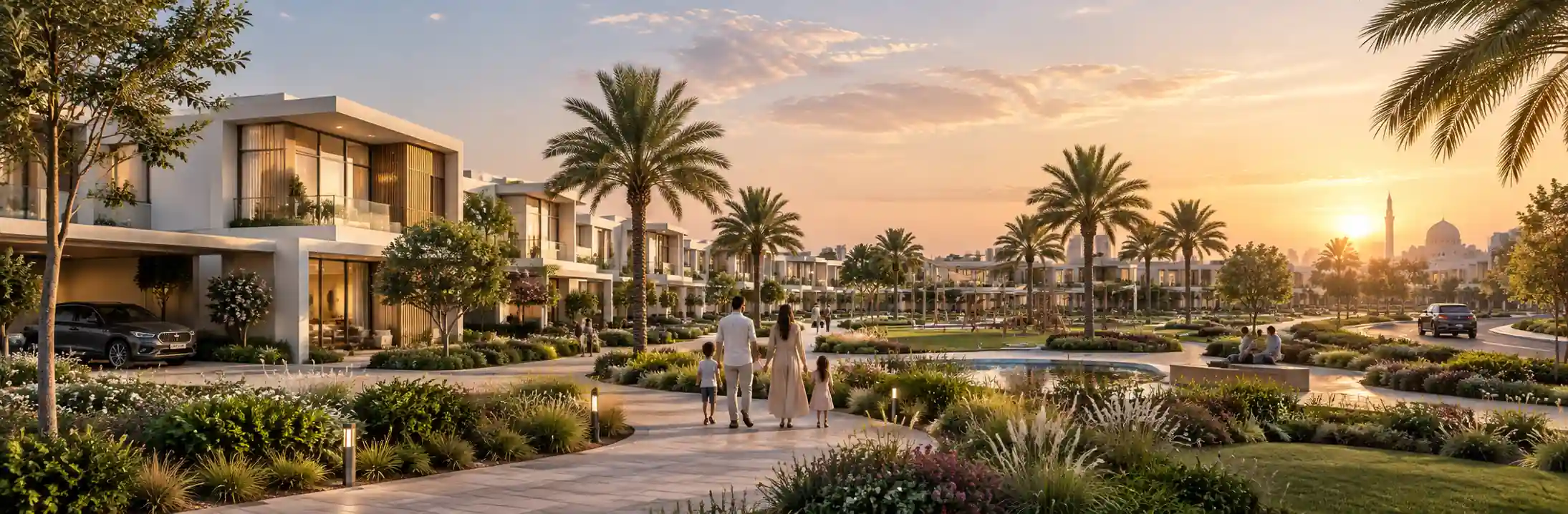
There is luxury, and then there is the point at which the normal rules of housing begin to dissolve.
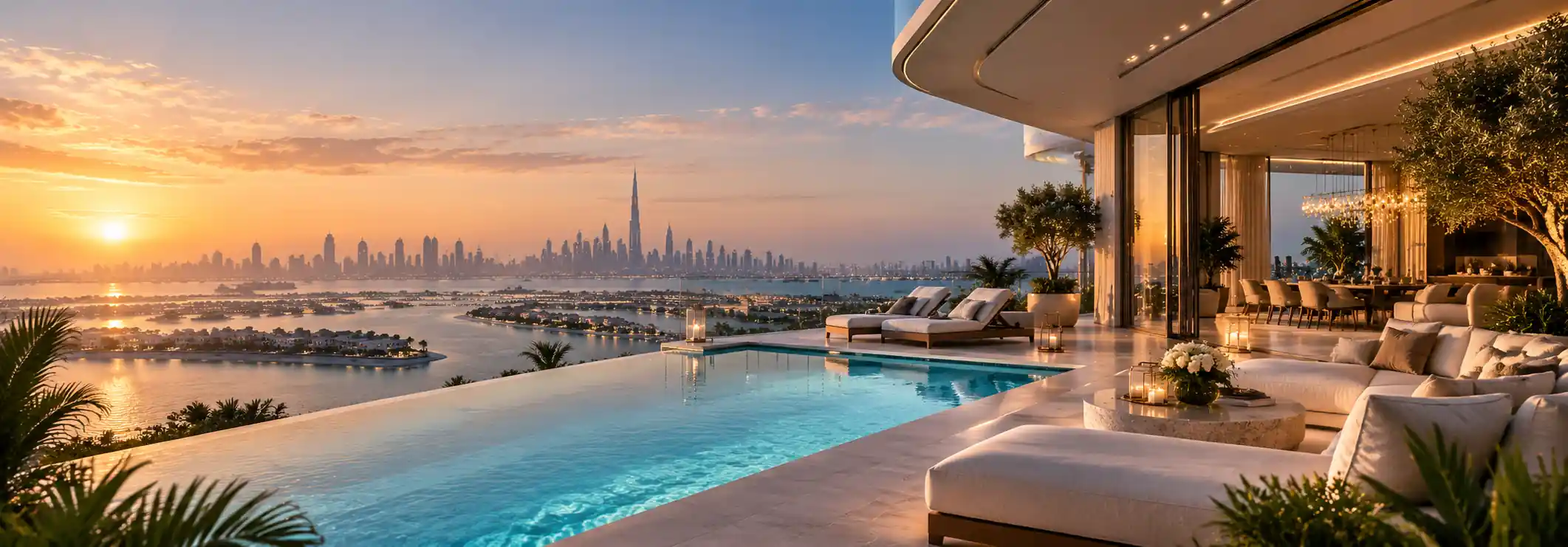
In Dubai, that point can mean a seven-bedroom villa priced in the hundreds of millions of dirhams, a penthouse larger than many suburban plots, a residence with its own swimming pool high above the sea, or an island home where the beach feels less like an amenity and more like the front garden.
This is the world people often describe with phrases such as Dubai billionaire homes, mansions in Dubai, luxury homes in Dubai and Dubai luxury penthouses. But the interesting question is not simply how much these properties cost. It is what changes about daily life when price is no longer the main constraint?
This article is not a list of verified homes belonging to named billionaires, and it does not claim that any specific billionaire lives in any particular project. Instead, it explores the kind of billionaire-level lifestyle Dubai’s ultra-prime residential market is designed to offer: privacy, enormous scale, hotel-level service, architecture as identity, direct relationships with water and views, and enough space to turn a home into a private world.
Dubai has become a serious global wealth city
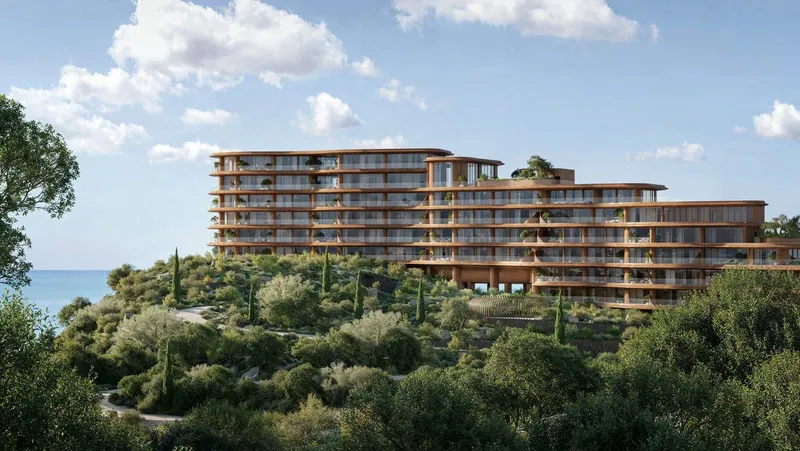
The fascination with Dubai’s most extraordinary homes is not happening in a vacuum. Henley & Partners’ 2025 World’s Wealthiest Cities report counted 81,200 resident millionaires, 237 centi-millionaires and 20 billionaires in Dubai, while reporting 102% growth in the city’s millionaire population over the preceding decade. Its 2026 wealth-migration research also described the UAE as the leading destination for millionaire migration over the previous two years.
Those figures do not tell us which building wealthy residents choose, but they help explain why developers are creating homes that would have looked almost absurdly oversized in Dubai twenty years ago. A global population of entrepreneurs, family-office principals, investors and internationally mobile families can choose among cities. Dubai competes not only with other property markets but with entire lifestyles.
For the ultra-wealthy, the purchase decision can therefore become less about “How many bedrooms do I get?” and more about questions such as:
- Can I arrive and leave without passing through busy public spaces?
- Can I entertain fifty people without giving up the private family areas of my home?
- Can children, guests and staff occupy different zones comfortably?
- Can wellness, work and leisure happen without leaving the property?
- Does the view feel permanent enough to become part of the home’s identity?
- Do I want a hotel-like service environment, or do I want the autonomy of a private mansion?
That is where Dubai’s ultra-luxury market becomes genuinely interesting.
At the top end, luxury becomes control
A marble bathroom is luxury. A private pool is luxury. But when we look at homes priced at AED 75 million, AED 180 million, AED 300 million or even around AED 500 million, those individual features stop explaining the value.
The real product is often control over the living environment. More control over who you see. More control over noise. More control over how guests enter. More control over where staff work. More control over how much of the day can happen privately. More control over whether the city feels close or far away.
That is why the most spectacular homes in Dubai often combine several forms of luxury at once: space, water, privacy, views, service and design pedigree.

The AED 500 million question: what are you really buying?
Jumeirah Asora Bay is a useful place to start because the DubaiHome.ai project database currently shows a range from AED 350 million to AED 500 million for its seven-bedroom villas, with residence sizes of roughly 27,000 square feet.
At that level, a home is no longer competing with ordinary villas. It begins to compete with private estates, landmark penthouses and trophy residences in other global wealth hubs.
The scale matters, but the more revealing element is the relationship between the residence and its setting. A giant home can still feel ordinary if it is boxed in by neighbours or disconnected from nature. Ultra-prime buyers often pay for the opposite: landscape around the architecture, open horizons, water, dramatic arrival sequences and enough separation for the residence to feel self-contained.
It is also why “price per square foot” becomes less useful as a lifestyle measure. Two homes with similar areas can deliver very different experiences if one has exceptional privacy, protected views, direct water access or a much stronger architectural identity.

When a penthouse stops feeling like an apartment
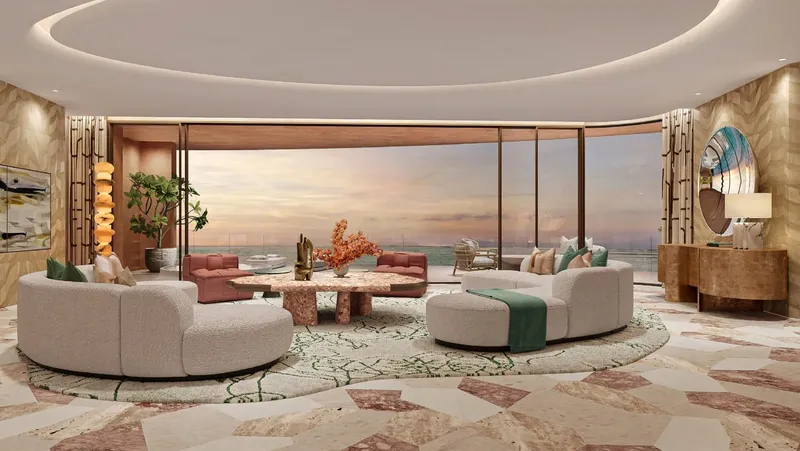
One of Dubai’s most distinctive ultra-luxury categories is the “villa in the sky.” The phrase is overused in property marketing, but some residences genuinely reach a scale where conventional apartment logic no longer applies.
A 20,000-plus-square-foot penthouse can have separate formal and informal living zones, private lift access, service corridors, staff accommodation, multiple kitchens, terraces large enough for outdoor rooms and swimming pools that would not look out of place at a standalone villa.
The psychological shift is important: the buyer is not choosing an apartment because they want less home. They may be choosing height because they want more view, more security and less ground-level exposure—without giving up the scale of an estate.

Serenia Living: the private resort in the sky
Serenia Living on Palm Jumeirah provides an extreme example. DubaiHome.ai currently lists a furnished six-bedroom penthouse of about 23,982 square feet at AED 300 million.
What is interesting is not merely the number. Palm Jumeirah already surrounds residents with beaches, hotels, dining and resort infrastructure. A residence at this level adds a second layer: the ability to retreat from that destination into a home that behaves like its own private resort.
For an owner who entertains frequently, the attraction is obvious. Large terraces, open reception spaces and sea-facing living areas allow the social side of the home to feel expansive, while the private bedrooms and family spaces can remain separate.


One Crescent Palm: when terraces become rooms
At One Crescent Palm, the DubaiHome.ai data shows a six-bedroom penthouse of about 26,050 square feet at AED 180 million.
The striking feature is how much of the architecture is dedicated to outdoor living. In Dubai’s cooler months, a large terrace can function as a second living room, dining room and entertaining space. Add a private pool, landscaping and open sea views, and the line between apartment and villa becomes almost meaningless.
This is one reason Palm Jumeirah repeatedly appears in searches for luxury homes in Dubai, Dubai penthouses and Palm Jumeirah property. The island allows a high-rise residence to borrow from the emotional appeal of a beachfront house.


Why the ultra-wealthy keep choosing water
Look across Dubai’s trophy-home market and a pattern appears quickly: Palm Jumeirah, Port de La Mer, the World Islands, Pearl Jumeirah, Dubai Marina and the Dubai Water Canal all recur.
Water performs several jobs at once. It creates view distance and, in some settings, can reduce immediate visual obstruction. It makes terraces more usable emotionally because there is something to look at. It can create a sense of separation from the city. And at the highest level, it supports yacht access, private beaches or simply the feeling that the home occupies an edge rather than the middle of a dense urban grid.
That does not make any view permanent. Buyers should still check the surrounding master plan, nearby plots and future development around the exact residence before treating a view as protected.
For a wealthy buyer with homes in several countries, that emotional distinction matters. A Dubai residence may not need to imitate a London townhouse or a New York penthouse. It can offer something those cities cannot easily replicate: year-round light, expansive sea views and resort living embedded inside a global business city.
The private-island fantasy
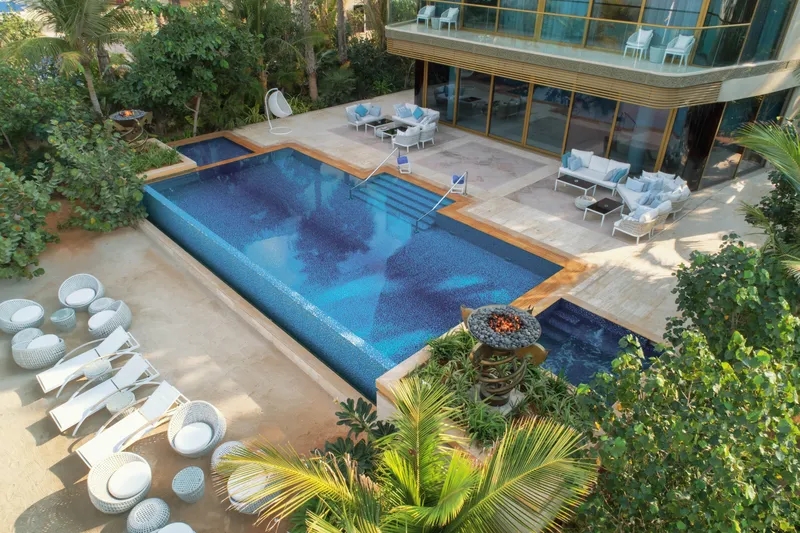
The Heart of Europe – Sweden Island represents another version of luxury: not height, but escape. DubaiHome.ai currently lists a furnished seven-bedroom villa of around 21,560 square feet at AED 125 million.
The appeal of an island residence is fundamentally different from a city penthouse. You trade instant urban access for psychological distance. The home becomes a destination. Outdoor spaces matter more. The pool, gardens and water are not background features; they shape the rhythm of the day.
For some owners, that is paradise. For others, it may feel too removed. Ultra-luxury is not a universal hierarchy—what feels priceless to one buyer can feel inconvenient to another.

Zuha Island: privacy as a destination
Zuha Island pushes the same idea in a more contemporary island direction. DubaiHome.ai currently shows five-bedroom villas of about 19,663 square feet, with current published pricing ranging from AED 75 million to AED 89 million.
What buyers are really purchasing in settings like this is scarcity of neighbours and a stronger relationship with landscape. The arrival itself becomes part of the experience. That is a very different luxury from living above a major financial district, but for privacy-focused families it can be more valuable.
The mansion is not dead — it has become a private ecosystem
Search interest for mansions in Dubai is not surprising when you look at how far the category has evolved. A modern Dubai mansion can combine family living, formal entertaining, staff operations, work, fitness, cinema, wellness and outdoor leisure under one roof.
Mews Mansions in Meydan, for example, is currently listed by DubaiHome.ai as a furnished five-bedroom villa of roughly 25,000 square feet at AED 75 million. Monaco Mansions in Dubai South stretches further: current DubaiHome.ai project data shows six- to eight-bedroom homes from roughly 20,000 to 39,000 square feet, with the upper end of published pricing reaching about AED 204 million.

What do you do with 20,000 to 40,000 square feet?
This is a fair question. At this scale, the extra area is not necessarily twenty more bedrooms. Instead, the home begins to divide into specialised worlds:
- Formal reception: spaces designed for guests, events and business entertaining.
- Private family living: a completely different lounge and dining environment for everyday life.
- Show kitchen and working kitchen: one integrated with entertaining, another designed for serious food preparation and staff use.
- Guest suites: closer to hotel suites than spare bedrooms.
- Primary suite: bedroom, sitting area, oversized dressing rooms, spa-style bathroom and sometimes a private terrace.
- Wellness: gym, sauna, steam room, treatment room, yoga space, plunge pool or indoor pool.
- Entertainment: cinema, games room, bar, music room or gallery-like areas for art.
- Work: private office, meeting space and discreet access for business visitors.
- Service: staff rooms, laundry, storage, back-of-house circulation and delivery access.
In other words, the mansion becomes less like a large house and more like a small private hospitality operation.
A quieter kind of luxury: Pearl Jumeirah
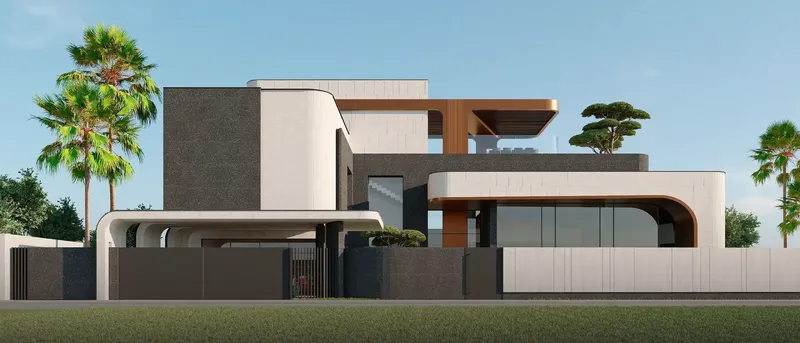
Isola Villa Terra Collection offers another mansion personality. DubaiHome.ai currently lists a furnished six-bedroom villa of about 15,155 square feet at AED 62 million.
Not every ultra-wealthy buyer wants the largest possible home or the loudest address. Some prefer a lower-profile villa environment where architecture, landscaping and privacy do more of the talking. That is an important distinction: at the top of the market, “bigger” and “better” are not always the same thing.
Branded residences: owning the home, outsourcing the friction
For some wealthy buyers, the ultimate luxury is not isolation. It is service.
That is why Dubai has become a major market for branded residences. The appeal can include concierge support, managed common areas, wellness facilities, security, housekeeping possibilities, hospitality-trained staff and a consistent design language. The owner keeps the privacy of a residence while gaining some of the convenience of a high-end hotel.
Armani Beach Residence is an unusually design-led example. DubaiHome.ai currently shows apartments and penthouses on Palm Jumeirah from AED 23 million to AED 348.5 million, with the largest residences reaching about 31,680 square feet. The project brings together Giorgio Armani’s interior language, Armani/Casa and architecture by Tadao Ando, with private beach access and extensive wellness and leisure facilities.
ORLA, Dorchester Collection, also on Palm Jumeirah, represents the service-first side of the idea. And Six Senses Residence in Dubai Marina shows how wellness-led branding can be applied to large apartments and penthouses.
The trade-off is important. Service does not come for free. Branded and heavily amenitised buildings can carry substantial ongoing service charges. A buyer who uses the spa, concierge, pools and managed facilities constantly may see excellent lifestyle value; someone who spends only a few weeks a year in Dubai may evaluate those costs differently.

For the ultra-wealthy, luxury can be as much about protecting time as displaying status
One of the more interesting shifts in global luxury is that conspicuousness is no longer the only signal. Knight Frank’s 2026 Wealth Report describes a broader shift from conspicuous consumption toward more intentional, experience-led luxury and personal growth. In residential terms, one way to read that shift is through homes designed to reduce everyday friction.
The most sophisticated homes can be organised around reducing that friction:
- a gym downstairs instead of a drive to a fitness club;
- a private spa instead of an appointment across town;
- a cinema instead of a public venue;
- a boardroom-quality office without leaving home;
- a beach or pool within minutes of the bedroom;
- concierge and security handling dozens of small daily tasks;
- multiple living zones so family, guests and staff do not constantly overlap.
Seen this way, billionaire-level luxury is not simply about having more objects. It is about buying time, privacy and optionality.
Five ultra-luxury lifestyles — and the homes that illustrate them
| Lifestyle | What matters most | DubaiHome.ai examples |
|---|---|---|
| Private coastal estate | Landscaping, separation, water, privacy, outdoor life | Jumeirah Asora Bay |
| Villa in the sky | Views, security, huge terraces, private pools, vertical privacy | Serenia Living; One Crescent Palm |
| Private-island escape | Seclusion, beach, destination feeling, low neighbour density | Zuha Island; Sweden Island |
| Grand family mansion | Space, staff zones, entertaining, wellness, multiple generations | Monaco Mansions; Mews Mansions |
| Branded service residence | Concierge, wellness, hospitality, design identity, lock-and-leave ease | Armani Beach Residence; ORLA |
What price bands can look like at Dubai’s extreme end
Price should never be treated as a permanent ranking because availability changes and individual residences differ dramatically. Still, the current DubaiHome.ai project data gives a sense of scale.
| Illustrative price level | What can appear at this level | Examples in the current DubaiHome.ai database |
|---|---|---|
| AED 50M–100M | Large waterfront villas, design-led mansions, branded residences and sizeable penthouses | Zuha Island, Mews Mansions, Isola Villa Terra Collection, ORLA |
| AED 100M–200M | Major private-island villas and exceptionally large Palm Jumeirah penthouses | Sweden Island, One Crescent Palm |
| AED 200M–350M | Estate-scale mansions and trophy penthouses with globally recognised design or hospitality positioning | Monaco Mansions, Casa AHS, Serenia Living, Armani Beach Residence |
| AED 350M–500M | A very small trophy-home category where location, scarcity and privacy become as important as area | Jumeirah Asora Bay |
Would you actually want to live in a 30,000-square-foot home?
This is where the fantasy becomes practical.
A giant home is impressive, but scale creates work. More rooms mean more cleaning, more cooling, more maintenance and more furniture. Pools and landscaped terraces require care. Large homes may need permanent staff. If the family travels constantly, huge unused spaces can start to feel less like freedom and more like an operation that has to be managed.
Some ultra-wealthy buyers therefore prefer a serviced penthouse precisely because it reduces friction. Others dislike shared buildings and would never trade a private gate for a concierge desk. Some want the energy of Palm Jumeirah; others want an island where the city disappears from view. Some want a famous design name; others want anonymity.
The point is that wealth creates options, not one correct lifestyle.
How different personalities might choose
- The entertainer: prioritises dramatic reception spaces, terraces, show kitchens, dining rooms and guest circulation. Large penthouses and grand mansions make sense.
- The privacy maximalist: cares about neighbour density, access control, private lifts, gated arrivals and visual separation. Island villas and low-density estates become more attractive.
- The service lover: wants the home to behave like a five-star hotel without actually living in a hotel room. Branded residences become compelling.
- The design collector: sees architecture and interiors almost like art. Names such as Tadao Ando, Armani/Casa, Killa Design or HBA can matter because the home itself becomes a design object.
- The family empire: needs guest suites, staff areas, offices, multiple lounges and enough separation for several generations. Mansion scale begins to make practical sense.
- The escape artist: wants water, horizon and a psychological break from the city. The private-island lifestyle may win even if it is less convenient for everyday commuting.
What should a buyer inspect at this level?
Spending more does not remove the need for due diligence. In fact, unusual homes often require more careful inspection because every residence can be unique.
- Exact unit and view: do not rely on the project’s best rendering. Confirm the selected residence, floor, orientation, outlook and what may eventually be built nearby.
- Net usable lifestyle space: a huge headline area can include terraces, circulation and voids. Understand what you actually use day to day.
- Privacy: study lift access, neighbouring terraces, sight lines, pool exposure, service entrances and guest circulation.
- Back-of-house planning: staff, deliveries, laundry, storage and kitchens can determine whether a huge home feels effortless or chaotic.
- Service charges and operating cost: pools, extensive glazing, landscaping, lifts and branded services can be expensive to run.
- Finishing and furnishing responsibility: understand what is delivered, what is optional and what a residence of this scale may cost to furnish properly.
- Construction and handover status: some homes in this article are complete while others are under construction. Reconfirm current progress and handover information.
- Contract details: review payment milestones, transfer conditions, cancellation/default terms, registration costs and developer-specific charges.
AED 0 buyer advisory fee from DubaiHome.ai. Official, developer, Dubai Land Department, registration, service, mortgage, banking, or other transaction costs may still apply depending on the purchase.
Frequently asked questions about Dubai’s billionaire-level homes
Where do billionaires live in Dubai?
There is no single “billionaire neighbourhood,” and the private homes of individuals should not be assumed or guessed. Palm Jumeirah and Emirates Hills are widely associated with Dubai’s ultra-prime residential market, while extraordinary new homes also appear in areas such as Port de La Mer, Safa Park, Pearl Jumeirah, the World Islands, Dubai Marina and other low-density or waterfront locations. This article focuses on the lifestyle and property types rather than identifying private owners.
How much do mansions in Dubai cost?
The range is enormous. DubaiHome.ai currently includes luxury villas and mansions from tens of millions of dirhams to projects where individual published residences reach well above AED 100 million. Jumeirah Asora Bay is currently shown from AED 350 million to AED 500 million, while Monaco Mansions reaches roughly AED 204 million in current published project data. Price depends on the exact unit, plot, size, view, specification and availability.
Can a Dubai penthouse really cost AED 300 million?
Yes. The current DubaiHome.ai database includes Serenia Living at AED 300 million and Armani Beach Residence with published pricing reaching AED 348.5 million. These are exceptional trophy residences rather than typical penthouses.
What is the difference between a luxury penthouse and a mansion in Dubai?
A mansion offers land, ground-level privacy, gardens and usually greater independence from shared building operations. An ultra-luxury penthouse can offer better views, strong security, private lift access, huge terraces and hotel-style services. At the extreme end, both can exceed 20,000 square feet, so the decision becomes more about lifestyle than size.
Why is Palm Jumeirah so popular for luxury homes?
Palm Jumeirah combines waterfront living with an established collection of beaches, hotels, restaurants and leisure destinations. It also offers several residential formats—from villas to branded apartments and enormous penthouses—so buyers can choose between private-house living and serviced vertical living without giving up the island setting.
Are the prices in this article guaranteed to remain available?
No. Ultra-prime inventory is limited and project pricing can change. The figures here reflect published DubaiHome.ai project information available during preparation of this article. Buyers should reconfirm current unit availability, exact price, payment schedule, fees, service charges, specifications and handover information before booking.
The real luxury is choosing your own version of Dubai
At Dubai’s extreme luxury end, the numbers are almost surreal. AED 180 million. AED 300 million. AED 500 million.
But after spending time with these homes, price becomes the least interesting part of the story.
The real differences are more human: Do you want neighbours or distance? Height or a garden? A concierge or your own gate? A famous design language or a blank canvas? A home built for spectacular parties or one designed to disappear from the world?
Dubai’s billionaire-level residential market is fascinating because it can offer all of those answers at once. It is not simply a collection of expensive properties. It is a catalogue of radically different ways to live.
For a specific ultra-luxury residence, always request the latest unit availability, exact price, floor plan, view, fees and developer terms before making a decision.